With the arrival of summer and the first warm, sunny days, Turin sheds the cold greyness of Winter and turns to the pastel colours of Spring.
The fresh days of March bring with them the desire to go out with friends and share and, in fact, there is no better time to enjoy the views and sunny squares of Turin, before the summer heat arrives, with overbearance, to make us gasp.
In this month’s post we are going to talk about what, for us, is perhaps the most anticipated moment of the day: the aperitif! During Spring months, in Turin, there is nothing better than ending the day or the working week with a Spritz in your hand and the sun still high in the sky.
Colourful, refreshing and not too alcoholic, the Spritz has become, over time, the king of Happy Hour all over the Country. From North to South, with its thousands of variations, the Spritz brightens evenings with friends and gives us carefree moments.
Where was the Spritz born?
There is still a certain amount of mystery surrounding the history of the Spritz, but it seems that one of the most widely accepted hypotheses places the origins of the Spritz at a time that is anything but recent. In fact, this cocktail was born between the end of the 18th and the beginning of the 19th Century in Venice, during the Austrian domination.
When Hapsburg soldiers first tasted Venetian wines – a little too strong for their palates – they decided to soften the flavour by diluting them with sparkling water. The name itself, in fact, originates from the German word “spritzen”, which literally means “to spray”.
So, white wine and sparkling water is the first true ancestor of our beloved aperitif cocktail. Although in some areas of Friuli Venezia Giulia, the Spritz is still served this way, the version we all know today was only born in the 1920s, when Venetian barmen decided to “colour” the mixture with Bitter.
Since then, the first variants of the recipe that the whole Triveneto region still claims today were born. The one from Padua, spiced with Aperol, is definitely the version of the Spritz that has had the greatest success, spreading first throughout Northern Italy, until it conquered aperitifs all over the world.
A hundred shades of Spritz
Due to its history, defining this cocktail with a single recipe is almost impossible. In fact, there are several variations. Let’s discover together the thousand nuances of Spritz!
Official IBA recipe:
6 cl Prosecco
4 cl Aperol
A splash of soda/seltz
Venetian recipe:
1/3 sparkling white wine
1/3 bitter
1/3 sparkling water
Brescian recipe (Pirlo):
4 cl Campari or Aperol
4 cl dry white wine
a splash of soda or very sparkling water
Enjoy Smile Tree’s version of the Spritz in Turin
While Veneto cafés offer the Mixed Spritz, in which the Aperol is replaced by a mix of Campari and Cynar, Smile Tree, in Turin, offer its very own version of the world’s most famous cocktail.
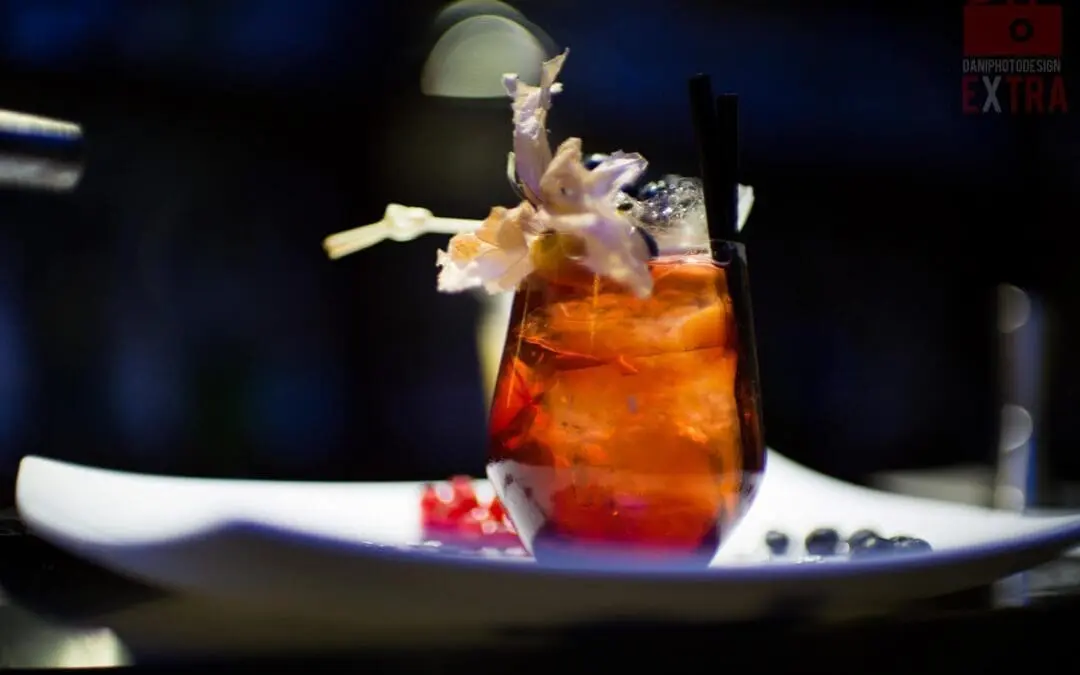
The Smile Spritz is the perfect aperitif cocktail for those who want to try a creative and curious version of the most popular drink. With a touch of sweetness of pineapple and the strong character of ginger, Smile Spritz is definitely a Spritz with a strong personality.
The citrus notes of the Aperol blend perfectly with the delicate pineapple, giving this cocktail new freshness for those shy Spring days.
What are you waiting for, at Smile Tree you can drink a Spritz like you’ve never had before, as well as enjoy vegan recipes and cocktails with a refined flavour and design, in one of Turin’s most beautiful squares.
Click here if you want to reserve a table for you and your friends! Smile Tree and its staff are waiting for you in Piazza della Consolata, in Turin.
Among the main ingredients of some of the most loved and drunk cocktails all over the world, there is one having very ancient origins and, above all, origins in Turin: Vermouth.
Fruit of the experiments and intuition of herbalist Antonio Carpano, Vermouth or Vermut was born in 1786 in a small store in Turin, from the fortunate union between wine and an infusion of herbs and roots.
In fact, its name derives from the term Wermut with which, in German, is called Artemisia Maggiore. The latter is a plant having digestive powers with which Antonio Carpano has aromatized white wine, together with other herbs, spices and flowers to which is added alcohol and sugar.
An important intuition of the young Turinese, who, thanks to the blend of herbs and aromas of the territory, made white wine more delicate and appreciable, also meeting the tastes and palates of ladies.
Today, it is classified as a liqueur and flavored wine and, since 2017, Vermouth di Torino is a registered geographical indication, as well as a source of Savoy pride.
The success of Vermouth, from the court of the Savoys to our days
Talking about Savoy pride, it seems the success of Vermouth is also due to the favor of King Vittorio Amedeo III. In fact, the history of the most famous fortified wine in the world is indissolubly bound to the Savoy family.
If the first intuition of young Antonio Carpano was to make the strong Piedmontese wine more tasty and appreciable by infusing it with herbs and aromas of the territory, the second one could be defined as a real and proper marketing strategy.
Carpano had a case of Vermouth delivered to the court. King Vittorio Amedeo III, and with him all of Turin’s nobility, were quite impressed. From that moment on, the young Carpano’s Vermouth and his small workshop took off, giving rise to a drink of worldwide success. A success that has come down to our own day, so much so that today a plaque in Piazza Castello commemorates that day.
Vermouth: from Turin to the whole world
Vermouth over the centuries has remained faithful to the original. Composition of 75% wine and selected choice of aromas. The installation dedicated to Punt e Mes, the Vermouth born in 1870, also belongs to Carpano.
One point of sweet and half of bitter is the meaning of the Piedmontese name and international brand, celebrated by Armando Testa’s campaign with a superimposed sphere (the point) and half sphere (the half), now positioned in the traffic circle in front of the old Porta Susa train station.
Today, Vermouth is used above all as a fundamental ingredient in aperitif cocktails, including Martini, Americano, Manhattan and Negroni. There are many types, distinguished by color (red, white and rose) and by taste (sweet, dry, extra dry and chinato).
Smile Tree’s Vermouth in Turin
Just like the young Turinese herbalist Carpano, we at Smile Tree like to experiment, mixing flavors and aromas of the territory to create unique products in which tradition and innovation come together. A product such as Fumigà, Smile Tree’s Vermouth, born from an idea of our barman Adrian Margineanu.
Fumigà Vermouth gives to the Turin drink par excellence a new and complex taste, within the classic and modern mixing.
Starting from the traditional blend of wine and Piedmontese artemisias, such as gentile and romana, the bouquet is completed by rose, lavender, cardamom, bitter orange, cloves and smoked black tea.
If you’re curious to try the unique and unmistakable flavor of Fumigà Vermouth, visit us at Smile Tree in Turin’s Piazza della Consolata.
Enjoying a cocktail while sitting at a pub table is an experience to be had alone or in the company of friends, at cocktail hour or late in the evening, amid chatter and laughter or in a moment of reflection. But what is the real ingredient that gives prominence to the mere act of drinking? The service provided. At Smile Tree, in the heart of Turin’s movida, a cocktail is more than just a cocktail: it is an experience for the eyes and the palate.
Originality and refined aesthetics: the strengths of Smile Tree’s cocktails
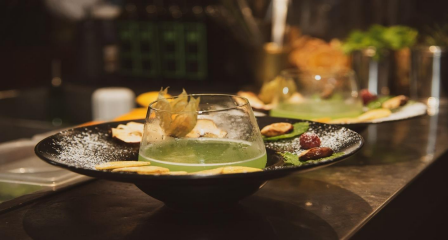
Making quality drinks is the essential foundation for any pub or venue, but is that really all it takes to satisfy customers? In front of a cocktail, perhaps sipped in company, thoughts often get shattered: one gets rid of the tasks and anxieties of daily life and enjoys a few hours of relaxation. And that’s the real secret: escape from stress and indulge in a few treats. Even better if the drink we just ordered, and have in front of us, offers a unique experience. At Smile Tree all this is possible. Located in Consolata Square, in the heart of Turin’s Quadrilateral, the venue makes cocktails that leave you breathless with the originality and creativity of the service. Traditional coasters give way to carefully honed stone and wooden stands, all the way up to actual serving plates, either deep or flat. Original additions are applied to the drink glass, such as the thousands of colors of perfectly plated fruit, as well as delicious accompanying appetizers. All seasoned by the original hand of the young and knowledgeable staff, who take care of every single detail to make each cocktail unique and inimitable. At Smile Tree, drinks are not just drinks: they are a visual experience because of the originality and refined aesthetics of the layout, as well as the quality of the products. At Smile Tree you don’t just drink a cocktail: you admire it, comment on it with friends, take photos of it to keep and maybe share on social media. In essence, you live it. With your eyes and with your palate.
Creative cocktails even in the ingredients, in search of continuous innovation
Smile Tree’s cocktails are not only presented as refined works of art, they delight the palate through the careful selection of ingredients. And there are ones for all tastes: sweet or bitter, spicy or sour, full of surprising colors and flavors that satisfy everyone’s needs. Traditional spritzes are joined by decidedly sophisticated drinks such as the original Orient Express, composed of vodka, berry liqueur, date syrup and chestnut honey water. Intense flavors are also found in the Lady Violet, where vodka is combined with lychee liqueur, violet liqueur, cocoa bitters and violet sugar. Even in the combinations of ingredients, then, Smile Tree stands out for its originality and creative spirit. An environment where monotony is not contemplated and where the search for innovative formulas is always buzzing. Try it to believe.
Lime: the ingredient that makes all the difference in cocktails
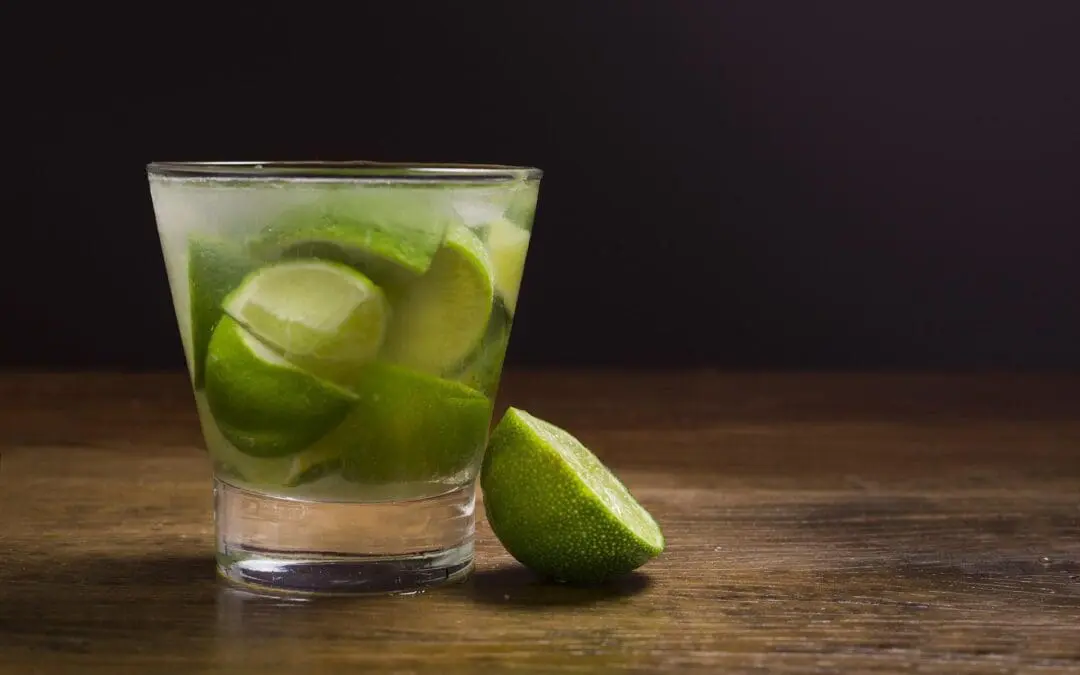
The perfect cocktail requires harmony and balance in the selection of ingredients used, the right dosage of smells and flavors to indulge in a tasty treat. One of these is the lime, a citrus fruit that gives the right acidity to the drink together with a freshness typical of its properties. Be careful, however, not to confuse it with the traditional lemon, which is often used to a lesser extent in cocktail making.
Tropical aromas and flavors: the use of lime in cocktails
Freshness and harmony of aromas and flavors are the essential ingredients for making the perfect cocktail, to be enjoyed as an aperitif after a stressful day at work or in an after-dinner relaxation with friends.
Brazil’s national spirit par excellence, cachaça is one of the signature ingredients of one of the most popular cocktails, the caipirinha.
The history of this spirit has its roots in the Portuguese conquest of Brazil and its processing is now a trademark of the South American country’s master distillers. Let’s discover in detail its characteristics, which make every preparation fruity, enveloping and aromatic.
The characteristics of cachaça and its manufacturing process
Cachaça is one of the iconic products of Brazilian tradition. A distillate with an unmistakable and aromatic flavour, it is the main ingredient in the preparation of the caipirinha that traditionally appears on the menus of pubs throughout Italy and beyond.
It is an aromatic and fruity brandy that comes from the distillation of sugar cane juice must. The process begins with the harvesting of the sugar cane, which is then crushed to obtain the juice, which is then cooked and fermented with the addition of yeast.
Once the juice has become a must, it is distilled, which can be done through different processes depending on the experience of the master distillers. The finished product is a mix of unmistakable aromas and flavours: the aroma is sweet, fruity, enveloping and leaves pungent, rich notes on the palate.
It generally consists of spicy hues, caramelised fruit, cinnamon, candied fruit: all ingredients that evoke tropical flavours and aromas and turn cachaça into a taste experience to be savoured. Obviously, the production of cachaça depends on the distillation method: it is generally slow and gradual, as it transfers more flavour nuances to the product.
Origini storiche della cachaça e il suo utilizzo nei cocktail
Although traditionally associated with the Brazilian tradition, cachaça actually originated on the island of Madeira in Portugal. It was only after the conquest of Brazil by the Portuguese that the new settlers imported sugar cane from Madeira, and a flourishing trade in the production of cachaça was born and developed on South American soil, which over the years has become Brazil’s signature spirit.
This traditional exotic spirit is often associated with rum, although there is a difference in the processing of the raw material. Both come from the distillation of fermented cane juice, however rum uses a waste product such as molasses, whereas cachaça comes from the fermented juice of the cane itself. The manufacturing process therefore changes, although both distillates retain an aromatic, fruity and unmistakable flavour.
Cachaça is the signature ingredient of capirinha, one of the most popular drinks, but it can also be used for other preparations. Smile Tree, a pub symbol of Turin’s movida, exploits its unmistakable characteristics in the Carioca cocktail: the distillate is combined with passion fruit puree and basil, lime juice and panela syrup, for an experience to be savoured.
The combination of particular ingredients with each other is one of the distinctive features of their business: enjoy their unique and original cocktails that you will hardly forget.